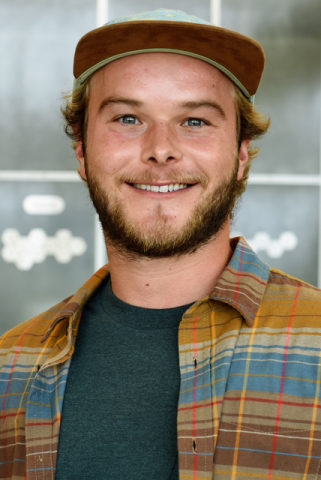
Divemaster embraces wetlands and webbed feet
Austen Hilding of Willmar, Minn. launched his role as a wetland ecologist in GLIFWC’s Biological Services Division in mid-January.
Hilding’s role centers on protecting and enhancing wetland habitat in the Ceded Territories, especially related to manoomin and migratory birds. He’ll conduct ground and aerial surveys to monitor wild rice beds, and plan and implement the annual harvest survey. Manoomin restoration activities, including site evaluations for habitat suitability and seeding, is another key role. GLIFWC member tribes will benefit from technical assistance from Hilding on issues related to wetlands and waterfowl.
Hilding attended Gustavus Adolphus College in St. Peter, Minnesota, graduating in 2016 degrees in geography and environmental science. He earned his master’s degree in 2025 from the Integrated Biosciences Graduate Program at the University of Minnesota, Duluth, where he studied the role that plant community diversity plays in shaping how native perennial prairie species respond to intensifying summer drought.
He is passionate about plant biodiversity conservation, ecological restoration, and climate change resilience. Before grad school, he worked multiple positions with the U.S. Bureau of Land Management in Oregon, Idaho, and Washington, D.C. He was also an assistant project manager for Prairie Restorations, Inc. in northern Minnesota.
As a certified divemaster, he has held multiple positions as a research diver for aquatic invasive species, including with the Minnesota Aquatic Invasive Species Research Center.
Hilding lives in Duluth with his fiancé, Angela. He enjoys the outside, especially hiking, skiing, and playing hockey. “I’m really honored and excited to join the GLIFWC team to help lead Manoomin conservation and preservation across the Ceded Territories,” he said.