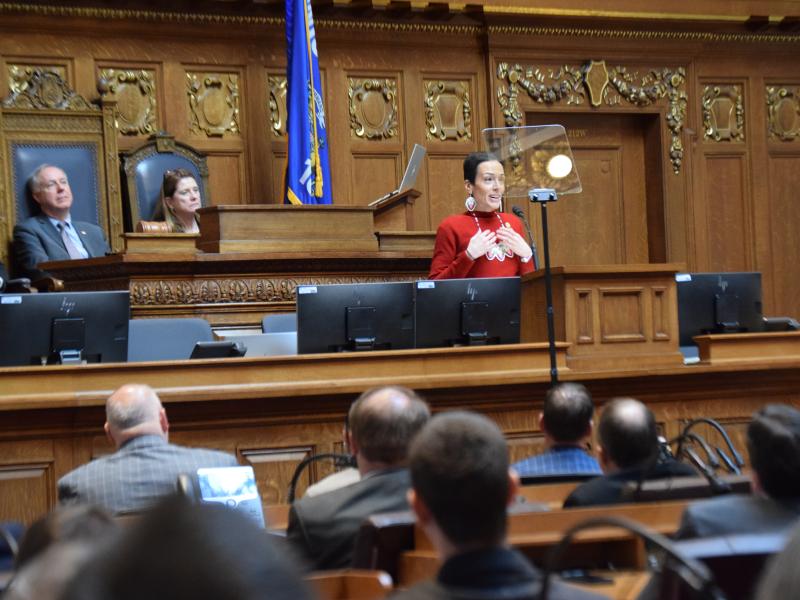
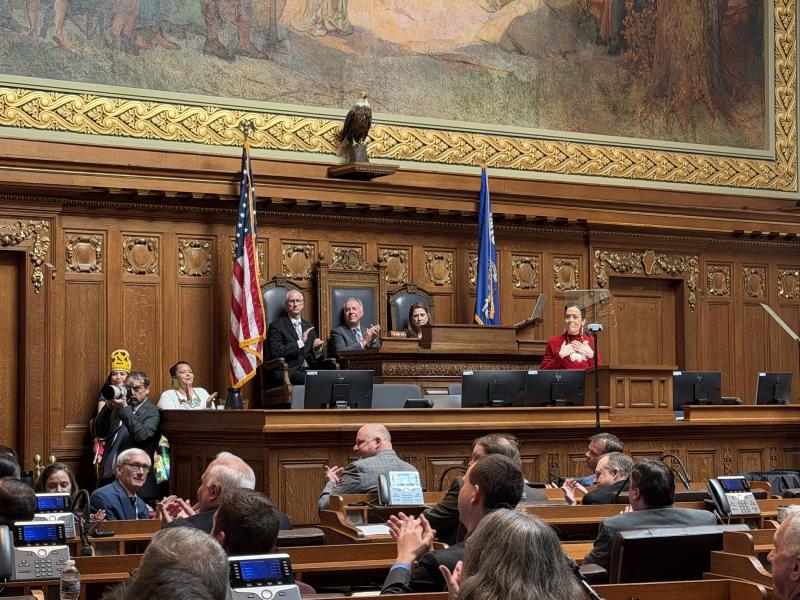
Madison, Wis–For the 22nd time, at the invitation of the Speaker of the Wisconsin Assembly, the annual State of the Tribes Address commenced. Chairwoman Nicole Boyd Bimikawekwe (Woman Who Leaves Tracks Where She Walks) took the podium to deliver the tribes’ message to the 107th legislature and a jubilant crowd.
Each year Wisconsin tribes, along with the Lac Vieux Desert Band, collectively decide which issues make it into the speech. Speakers will add their own personal touches as well.
Boyd’s February 10th address centered on protecting water with distinct legislative asks of the body. Between thunderous applause and standing ovations, Boyd’s grandbaby, Maeve filled the chamber with the sound of her coos. Boyd’s remarks were specific and directly addressed the importance of treaty rights:
“Governor Evers’ Executive Order 277 Relating to Treaty rights and the protection of wild rice is an example of honoring tribal ecological knowledge and the significance of working in partnership toward a common goal…tribal nations request that you consider naming Manoomin, the Wild Rice, as the official state native grain. This natural resource holds immense cultural value and is a vital component to Wisconsin’s wetlands.”
“This is the place our ancestors fought for and are buried within. And we will continue to exercise our treaty rights in perpetuity. The motivation to protect our home may never be relatable for some, but as we face the upcoming challenges related to growing technology and social injustices, I urge us to be vigilant and not surrender our values.”
Helping amplify native voices
For more than 20 years Therese Safford of the Great Lakes Inter-Tribal Council (GLITC), has been quietly and efficiently organizing the annual State of the Tribes Address. Safford, an executive assistant at GLITC for 23 years said although her role and title has shifted over the years, she’s been the point person for the State of the Tribes Address since the very beginning.
Recurring conversations between longtime president of the Stockbridge-Munsee Tribe Robert “Bob” Chicks and then-Speaker of the Assembly John Gard led to GLITC’s Board of Directors passing a resolution committing the organization to creating something similar to the State of the State speech, which is delivered annually by the governor.
“The first one was the result of good relationships and brainstorming between state and tribal leaders,” said Safford.
GLITCs Board of Directors consists of the chairpersons (or their designee) of the 11 federally recognized tribes in Wisconsin plus Lac Vieux Desert of Michigan.
The event has landed anywhere from February-May over the years. Because the Assembly doesn’t officially set their calendar until the new year, Safford doesn’t know the final date until their schedule is announced in January.
“Once the date is settled, the first thing I do is apply for the Rotunda permit for the drum circle,” she said.
For the first few years, GLITC’s board president gave the speech. But that process has shifted over the years. There have been other changes too.
“The procession around the Capitol, the drum circle in the Rotunda and the teleprompter have all been welcome additions to the day,” she said.
Safford is also grateful for the tribal support and the many helping hands that roll up their sleeves along the way. Capitol staff, especially the tribal veterans liaison, have always been really welcoming. Each tribe usually brings at least two people for the Color Guard, one drummer, their nation’s flag, and a staff.
Each year Safford feels like she’s watching the event from a different vantage point: “Some years I’ve been in the back, on the floor, or up the galley.” No matter where she’s watching from, the day is always a powerful in-person experience, she said.