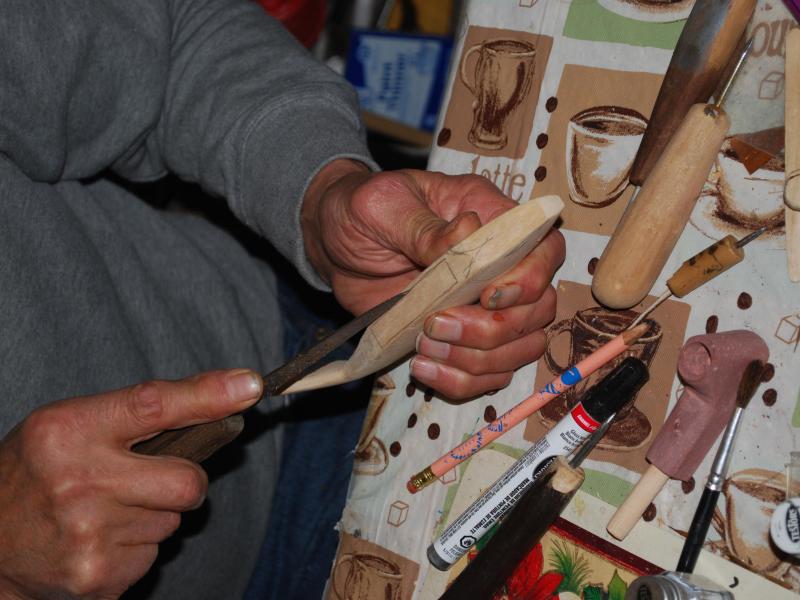
Ice spearing culture camp lures in school of grown-ups
By Jenny Van Sickle, Staff Writer
On the eve of the Sucker Moon, a log cabin style multi-purpose building in Lac du Flambeau, Wis. came alive for a second night of carving and painting fish decoys as the aromas of warm bread and wild rice soup filtered through the air.
Voigt Intertribal Task Force representatives Gerry Mann and Lyle Chapman organized the three-day camp with Lac du Flambeau’s special events committee member, Charlene Theobald to encourage beginner, adult…
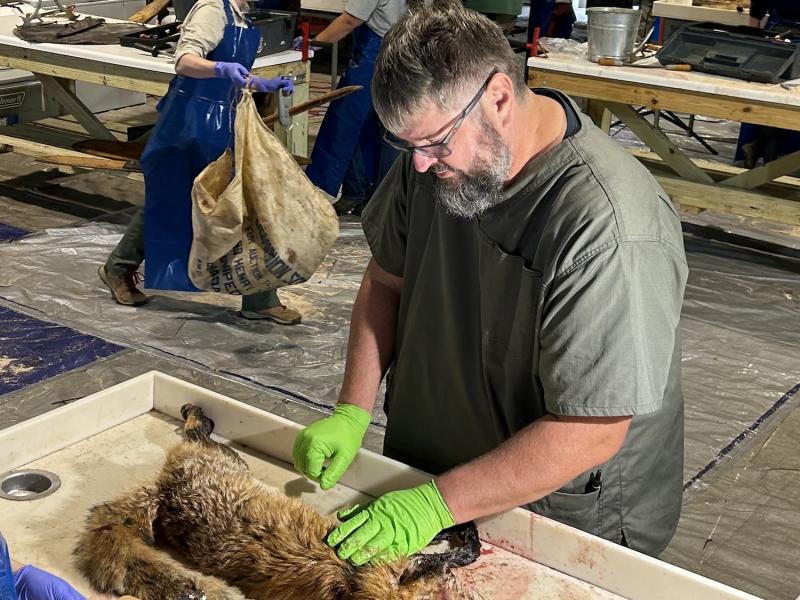
For research or pelts, BMPs illuminate the good path to humane trapping
By Charlie Otto Rasmussen, Editor
Ashland, Wis—At first glance through a door window, the space conjured the trappings of so many police procedurals, forever streaming on network television, as men and women dressed in matching aprons pored over examination tables. Inside, overhead lights illuminated a series of white polymer tables, while the clinking of scalpels and forceps on stainless steel pans accented low murmurings about trauma and tissue samples.…
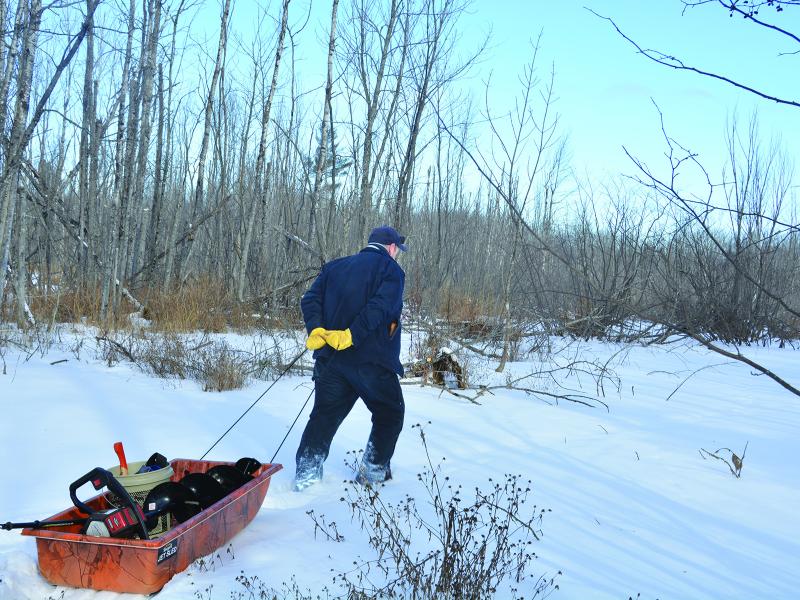
Trapping for beaver remains a time-honored tradition
By Bay Paulsen, Staff Writer
From the Ziigwan (spring) 2025 issue of Mazina'igan
It only took a few minutes of walking away from the rural parking spot to reach a space where “civilization” melted away, where the only sound of the unnatural world was the faint buzz of trucks and commuters driving along the nearby highway. The snow on the ground, several inches to a foot in depth, and the soft clumps clinging to the trees helped to dampen the fading noise. Ojibwe fur…
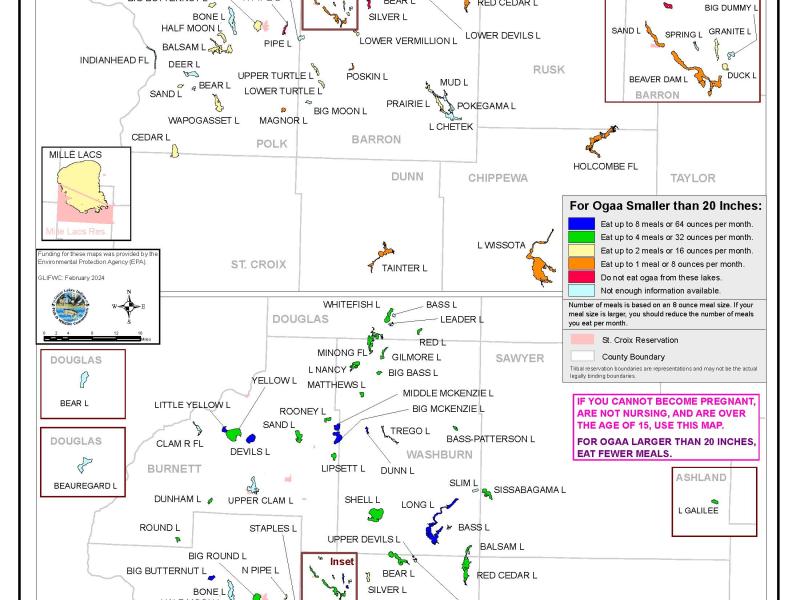
Weweni amwaadaanig ogaawag
Let's eat walleye safely
The return of extended sunshine after a long cold winter means spring ogaa (walleye) spearing season is on the horizon. As families begin to prepare for spring harvest activities, food safety is a top priority. GLIFWC’s Mercury Maps can help you and your family make informed decisions about where to harvest ogaa and how much is safe to eat.
Like all fish species, ogaawag contain mercury, a contaminant that can have negative health impacts, particularly…
Anishinaabe Insights: A closer look at TEK - Indigenous knowledge finds its way into science & policy.
By Michael Waasegiizhig Price, GLIFWC TEK Specialist
In November 2021, the President of the United States issued an Executive Memorandum ordering all federal agencies to integrate Indigenous Traditional Ecological Knowledge (ITEK) into federal decision-making. This memorandum is meant to strengthen relations between federally recognized tribal nations and the federal government, as well as tap into the rich wisdom that Indigenous people possess about the landscape. But what does this…
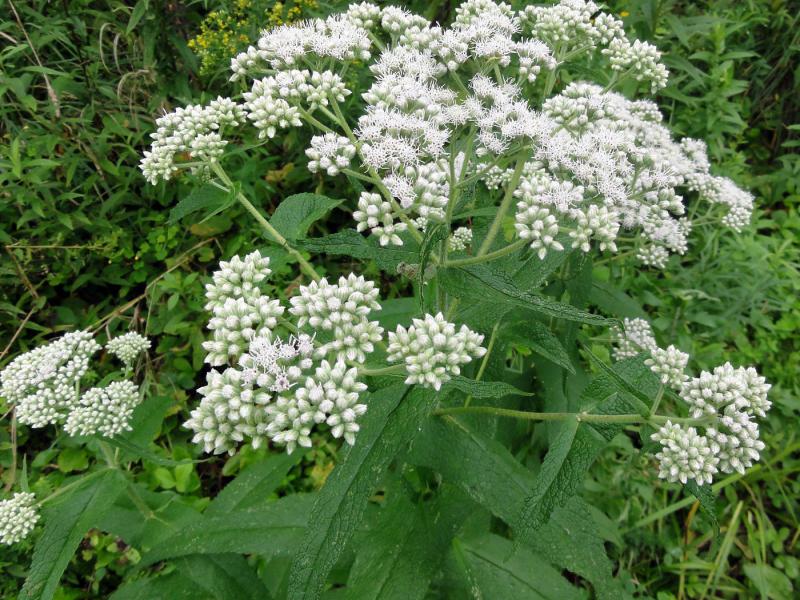
The word is out on Ganawenindiwag agamiing (They take care of each other on the shore)
By Rob Croll, GLIFWC Climate Change Program Coordinator
When Cherie Hagen, Lake Superior Unit Manager in the Wisconsin Department of Natural Resources Office of Great Waters, heard Lake Superior National Estuarine Research Reserve (LSNERR) and GLIFWC staff share a presentation on Ganawenindiwag: Working with plant relatives to heal and protect Gichigami shorelines at the 2024 St. Louis River Summit she was excited about this new resource and started thinking about how her…
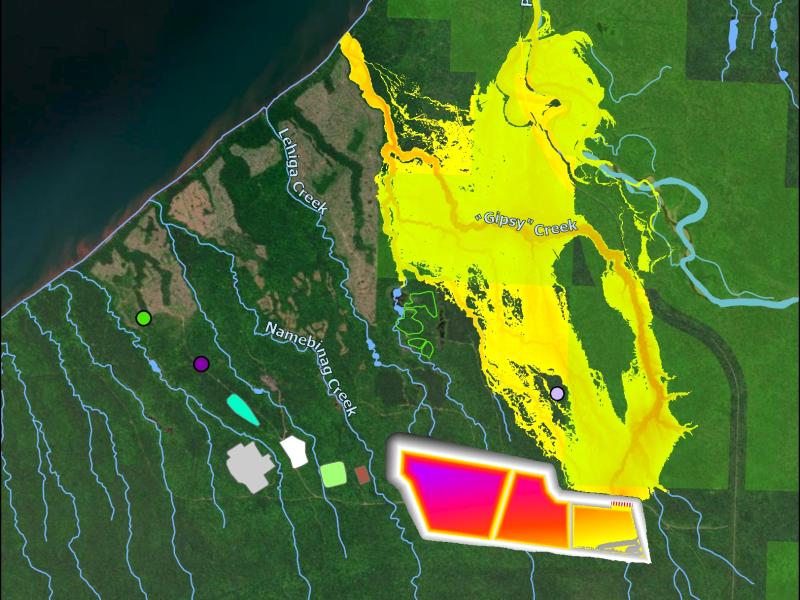
Copperwood project updates: A funding shortfall & GLIFWC report details potential mining waste threat
By John Coleman GLIFWC Environmental Section Leader
Following the failure of a $50 million grant from the Michigan Economic Development Corporation (MEDC) to Highland Copper to make it into the state budget for the proposed Copperwood Mine, site development has slowed but continues to move ahead. Tapping existing funds, Highland Copper is creating wetlands at the Gogebic County site as part of the project’s wetland and stream mitigation program. The MEDC grant was slated to…
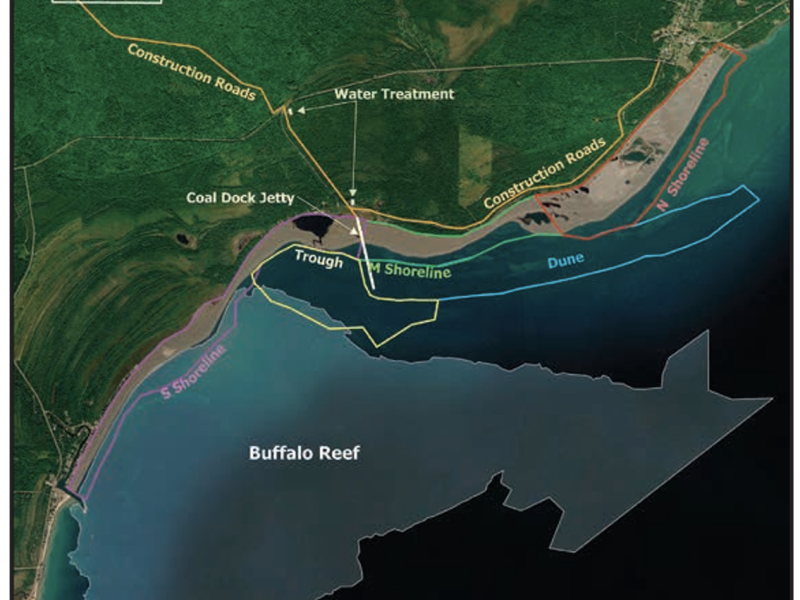
Protecting and restoring Buffalo Reef Final Alternatives Analysis released
By Esteban Chiriboga & Jennifer Vanator GLIFWC Staff
Gay, Mich.—The almost two-decade long effort to address contamination from mine tailings along the eastern shore of the Keweenaw Peninsula takes a major step forward with the release of the Final Alternatives Analysis report. This past January the Buffalo Reef Task Force (BRTF) released the Final report, which outlines all alternatives that were proposed and analyzed for addressing the encroachment of mine tailings, or stamp…
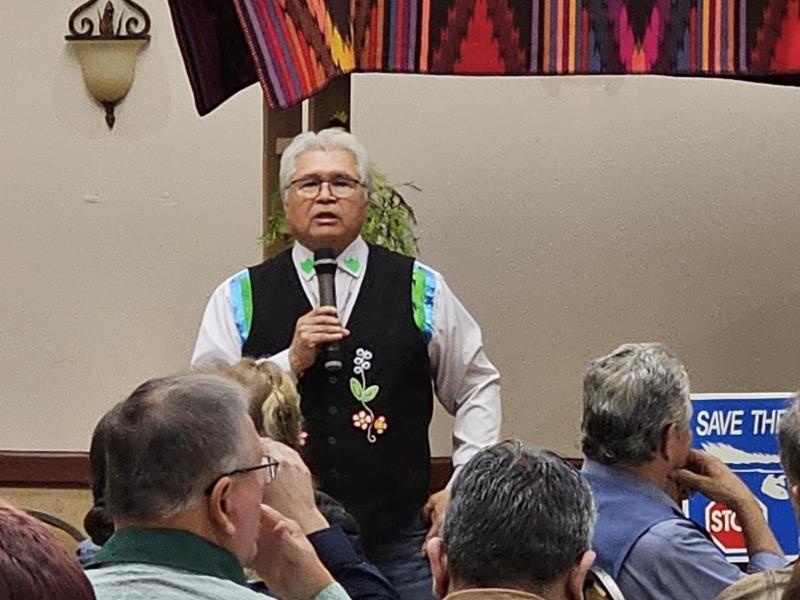
20th Anniversary Celebration for the purchase of the Crandon Mine
On November 29th, 2023, the Mole Lake Band of Lake Superior Chippewa and Forest County Potawatomi hosted their 20th Anniversary Celebration for the purchase of the Crandon Mine.
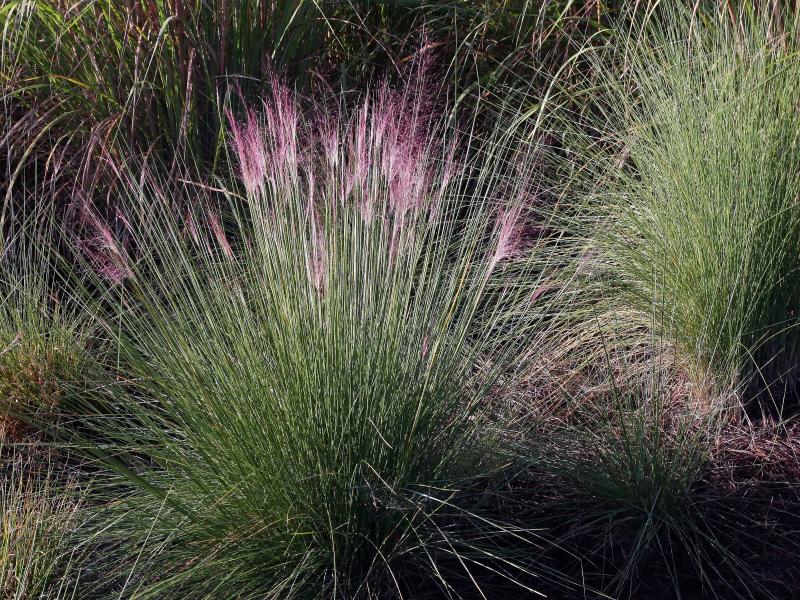
Molinia moves in
At least 232 species of grasses occur outside cultivation in Wisconsin. About 60% of these are native to the state, with the other 40% arriving since European settlement. One of the more recent arrivals is purple moorgrass. It probably was brought over as an ornamental grass, due to it’s clumping (“cespitose”) habit and attractive purplish seed stalks in late summer. Purple moorgrass (Molinia caerulea) is a perennial grass native to Europe, North Africa, the Caucasus region and Siberia. It…